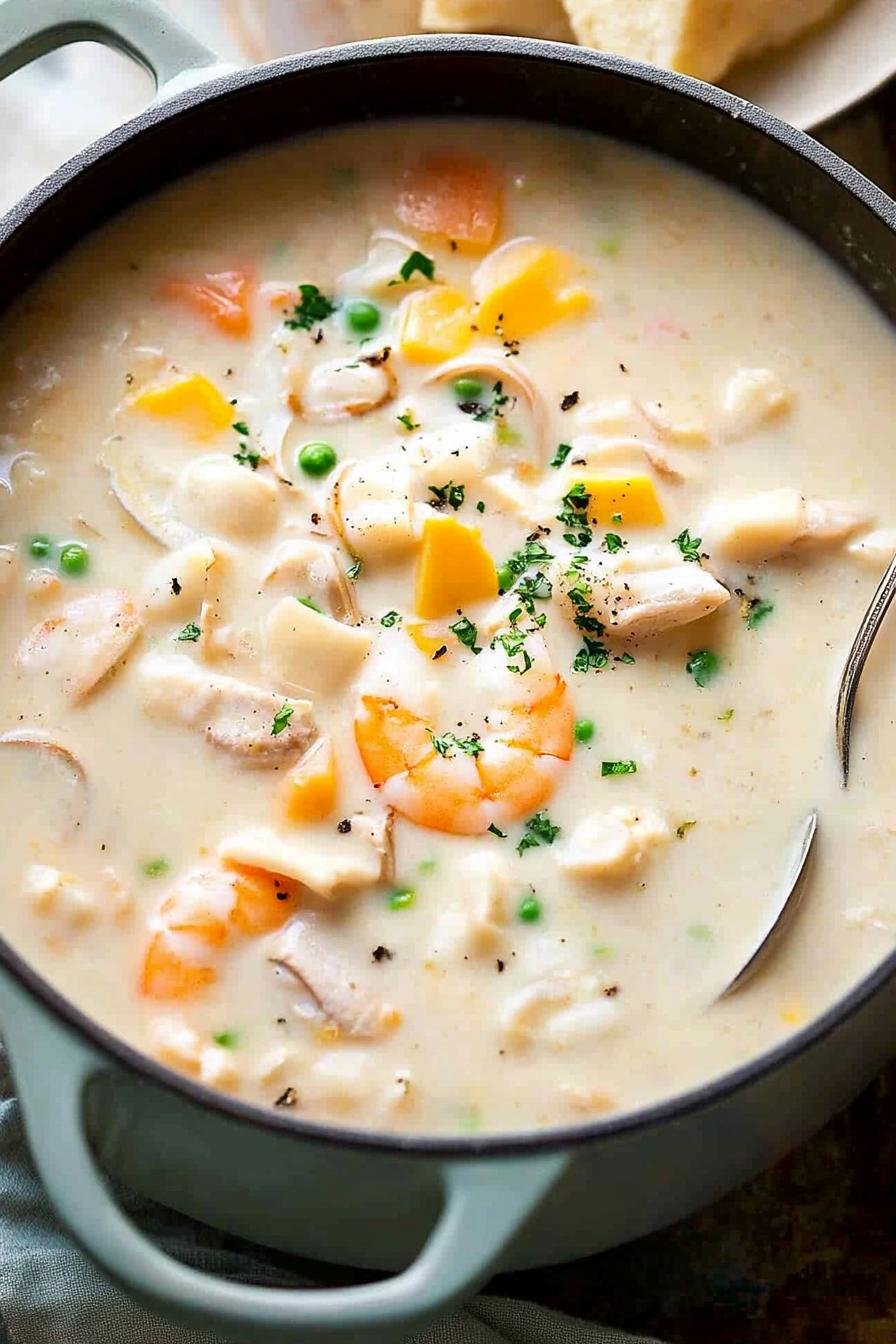
The first spoonful of Seafood Chowder greeted me with fragrant steam and a silken swirl of cream that I’d perfected after three kitchen trials. Each attempt revealed new layers of flavor—from the smoky pop of bacon crackling at the pan’s edge to the tender bite of potatoes breaking down just right. I’ve tweaked this chowder until the broth shines glossy and the seafood stays succulent, and I can’t wait to share those discoveries with you.
Why You’ll Love Seafood Chowder
- Comforting creaminess balanced by briny seafood and earthy thyme.
- One-pot simplicity—sauté, simmer, serve.
- Textural contrast: soft potatoes, tender fish, pops of peas.
- A nod to New England’s coastal kitchens.
A Little Background
On a blustery afternoon I first tried this chowder, chasing that nutty, toasted scent of sautéed veggies. Curious about origin, I learned chowder likely began as a simple fisherman’s stew along Atlantic coasts. My kitchen twist emerged after adjusting cooking times for potato cubes and seafood—details you’ll appreciate in every spoon.
Testing Note (Prep): Early trials taught me that uniformly cutting potatoes into 2 cm cubes ensures they soften precisely in 15 minutes, neither mushy nor underdone.
Key Ingredients for Seafood Chowder
- Bacon (3 rashers, chopped): Renders smoky fat; thick-cut for better texture.
- Potatoes (2 medium, 450 g, diced): Yukon Gold holds shape; peel for silky broth.
- Mixed seafood (400 g): Shrimp, scallops, firm white fish; fully thaw, pat dry to avoid watering down.
- Milk (300 ml) & Cream (200 g): Creates that velvety mouthfeel; don’t boil vigorously.
- Fish stock (600 ml): Homemade or cubes; deepens oceanic flavor.
How to Make Seafood Chowder
- Heat a heavy pot over medium-high. Add 25 g butter and 3 rashers chopped bacon. Once it crackles and releases fat (about 3–4 minutes), stir in 150 g diced onion, 60 g celery, 100 g carrot. Sauté 4 minutes until golden edges appear, then toss in 2 crushed garlic cloves for 30 seconds until fragrant.
- Sprinkle 3 tablespoons plain flour over the vegetables. Stir continuously for 1 minute, coating everything in a light roux and turning it a pale gold.
- Gradually whisk in 600 ml fish stock until smooth. Pour in 300 ml milk, 200 g cream, 1 teaspoon dried thyme, and 1 bay leaf. Add 450 g diced potatoes. Bring to a gentle simmer and cook 15 minutes, until potatoes yield to a fork.
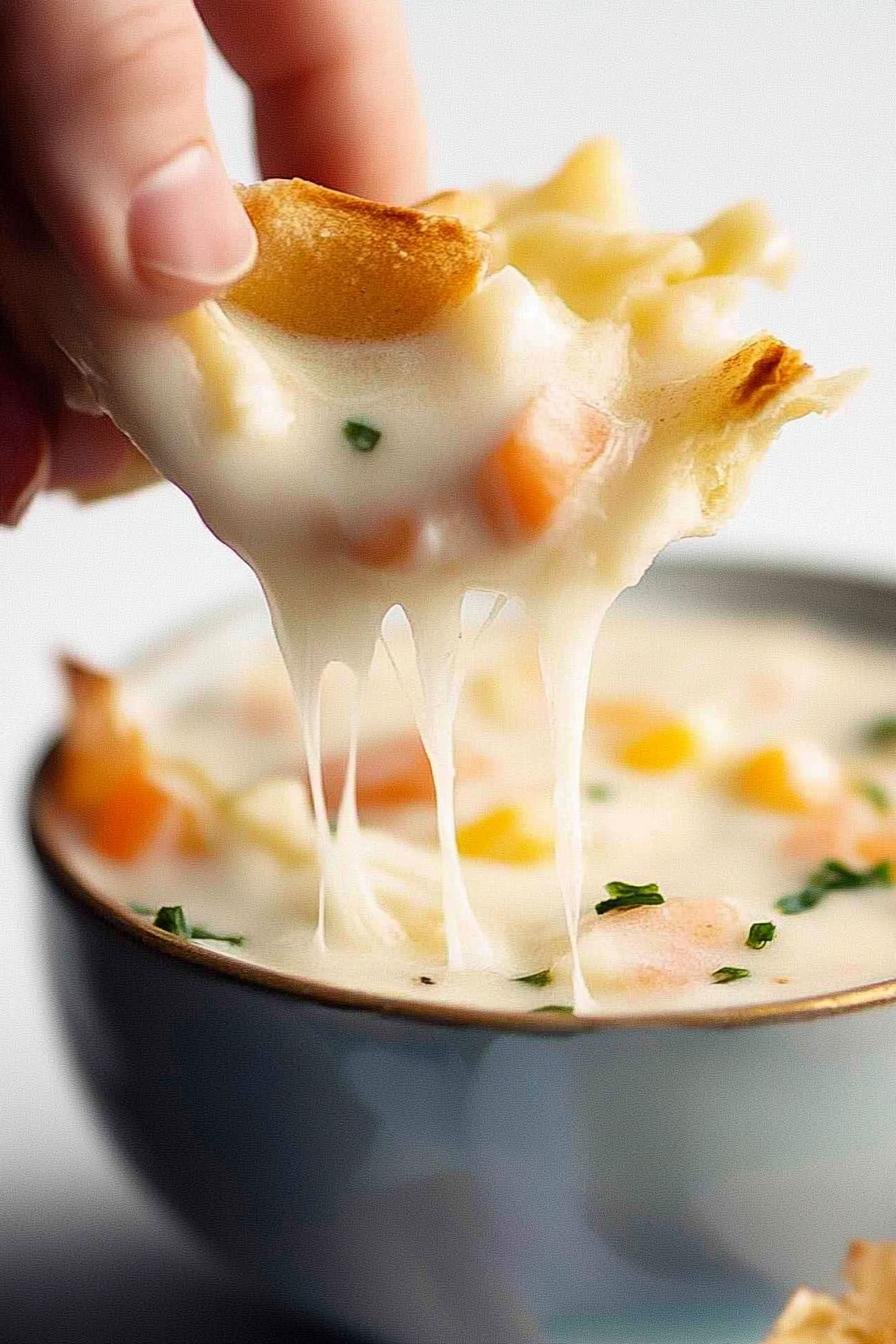
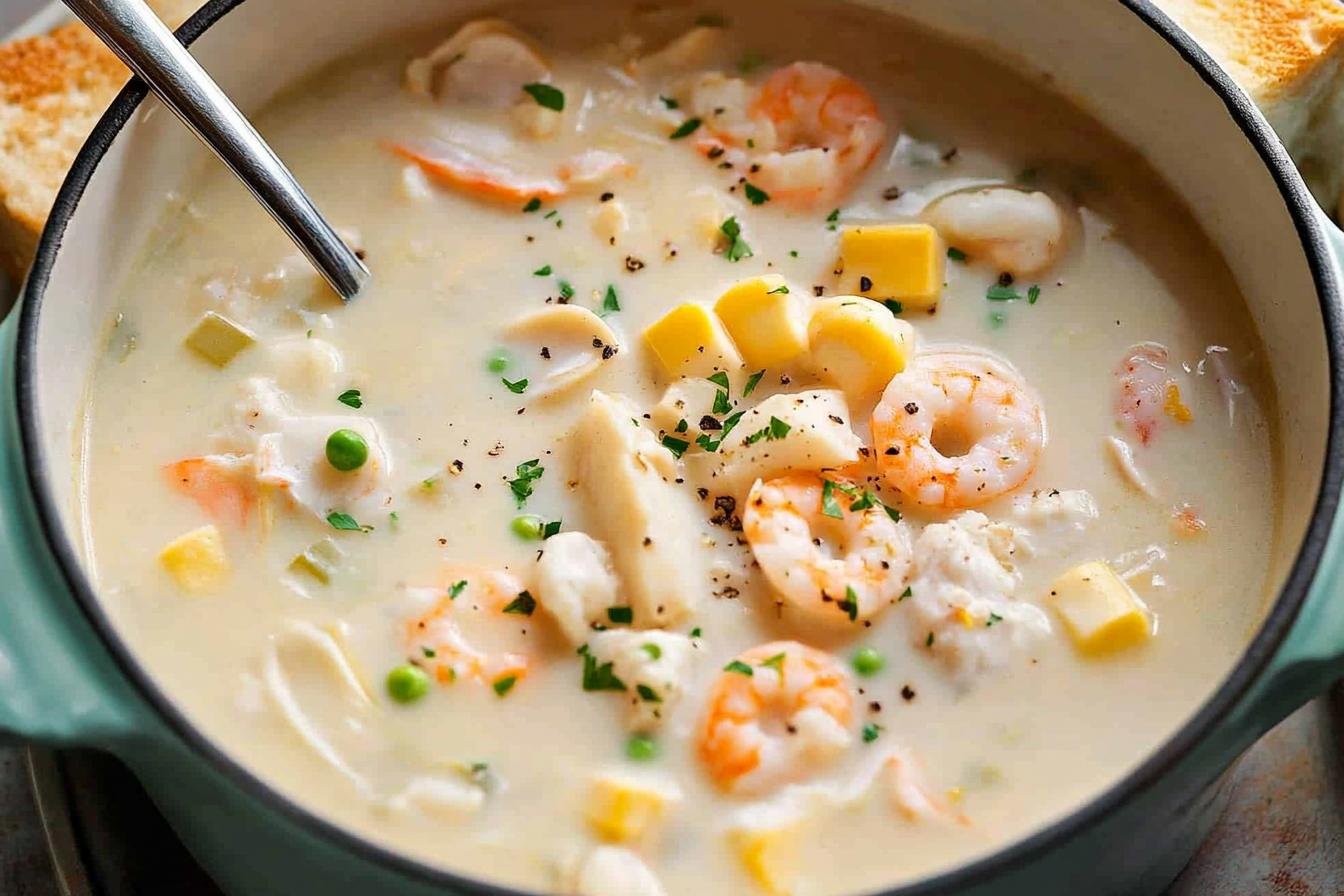
- Stir in 400 g mixed seafood and 150 g frozen peas. Simmer 2–3 minutes, until seafood turns opaque and peas are tender. Discard the bay leaf, season with salt and pepper, and garnish with chopped parsley.
Pro Tips & Troubleshooting
- Testing Note (Cooking): I found a gentle, barely-there simmer keeps the cream from curdling and preserves a glossy finish.
- Problem: Broth too thin? Pat seafood completely dry and cook uncovered so excess moisture evaporates.
- Variation: Add a splash of dry white wine with the stock for subtle acidity, or a pinch of smoked paprika for warmth.
- Scaling: To double, use a wide heavy pot; extend simmer times by 3–4 minutes to ensure even cooking.
Storage & Make-Ahead Guide
Cool to room temperature within 2 hours, then store in airtight containers. Refrigerate up to 3 days. For longer keeping, freeze in single-serve jars for up to 2 months—thaw overnight in the fridge. Reheat gently over low heat to at least 75 °C, stirring frequently to maintain creaminess. Discard any chowder left out over 2 hours.
Testing Note (Storage): After freezing batches, I discovered that reheating gradually on low heat prevents the cream from separating—just as rich the next day as fresh.
Serving Suggestions
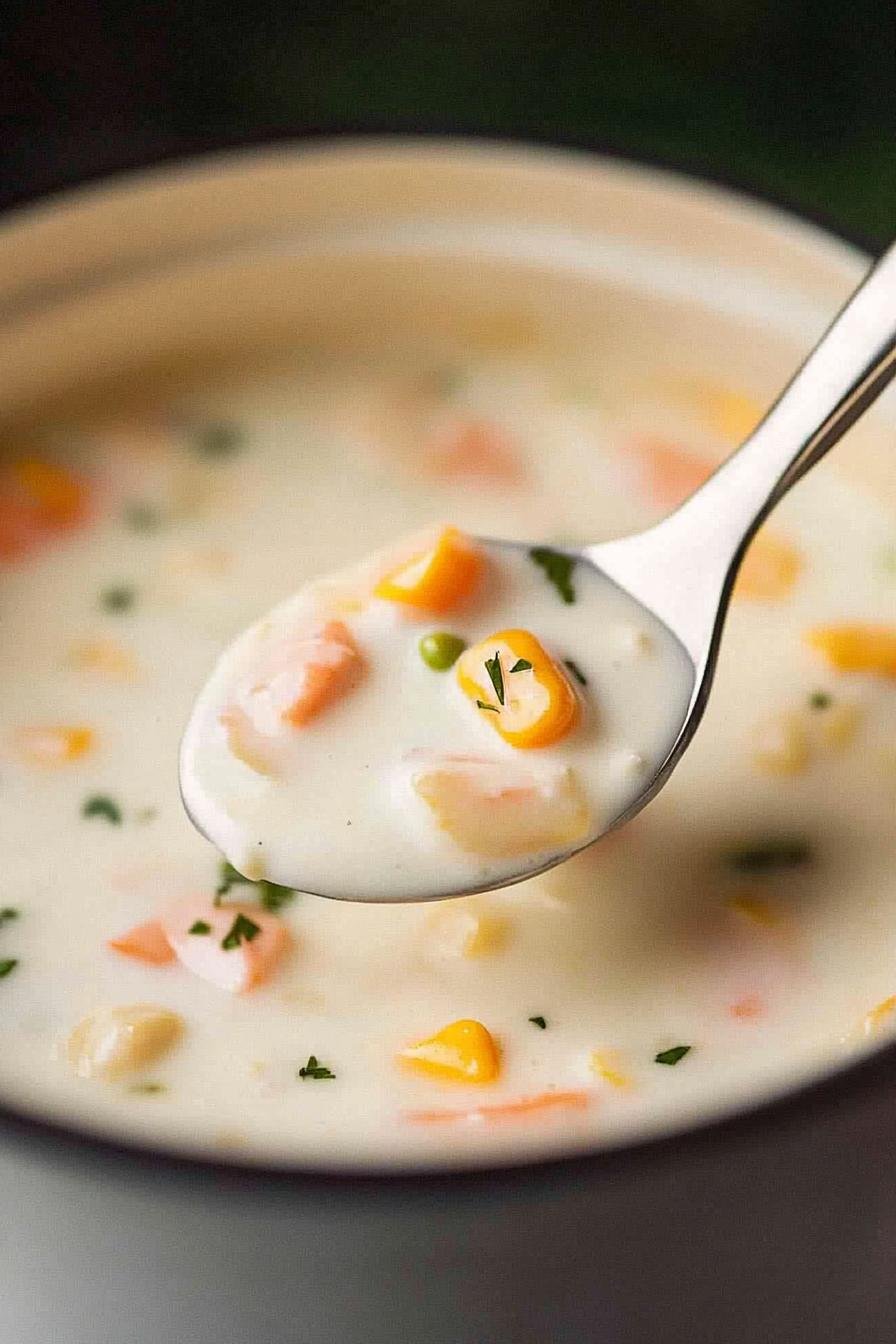
Serve in deep bowls with crusty bread for mopping up every drop. Top with garlic-toasted croutons or a sprinkle of chives. A crisp fennel salad on the side cuts through the richness beautifully.
Frequently Asked Questions
- How can I thicken seafood chowder? Make sure you cook the roux (flour and fat) for at least 1 minute, and simmer uncovered so liquid reduces.
- Can I use chicken stock instead of fish stock? Yes—chicken stock works in a pinch, though fish stock gives more authentic ocean flavor.
- How long will seafood chowder last in the fridge? Stored properly, it keeps 3 days in the fridge.
- Can I freeze seafood chowder? Absolutely—freeze in portioned jars for up to 2 months. Thaw overnight before reheating.
- Which types of seafood are best for chowder? Firm white fish, prawns, scallops or a seafood mix all work. Pat seafood dry to avoid a watery broth.
- What goes well with seafood chowder? Crusty bread, garlic croutons, or a light green salad make perfect companions.
Final Thoughts
This Seafood Chowder has become my go-to when I want a bowl of cozy, seaside-inspired comfort. The way the bacon crackles, the broth glistens, and the seafood stays yielding makes it a dish I’m proud to share. I can’t wait for you to try it—let me know how your kitchen trials turn out!
More Recipes You’ll Love
- Pressure Cooker Seafood Stew – a similarly rich seafood broth you can make in under an hour
- Seafood Fettuccine Alfredo – indulge in a creamy seafood pasta that echoes chowder’s lush texture
- Instant Pot Shrimp Alfredo – speed up a velvety shrimp dish with your pressure cooker
- Garlic Butter Shrimp Pasta – bright garlic flavors that pair beautifully with a creamy chowder
Seafood Chowder
Ingredients
Method
- Melt 25 g unsalted butter in a heavy pot over medium-high heat. Add 3 rashers chopped bacon and cook for 3–4 minutes until crackling.
- Stir in 150 g diced onion, 60 g sliced celery and 100 g diced carrot. Sauté 4 minutes until vegetables begin to brown.
- Add 2 crushed garlic cloves and cook 30 seconds until fragrant.
- Sprinkle 3 tablespoons plain flour over the vegetables. Stir continuously for 1 minute to form a light roux.
- Gradually whisk in 600 ml fish stock until smooth. Pour in 300 ml milk and 200 ml cream, then add 1 teaspoon dried thyme and 1 bay leaf.
- Add 450 g peeled and diced potatoes. Bring to a gentle simmer and cook for 15 minutes until potatoes are tender.
- Stir in 400 g mixed seafood and 150 g frozen peas. Simmer for 2–3 minutes until seafood is opaque and peas are tender.
- Discard the bay leaf, season with salt and pepper to taste, and sprinkle with chopped parsley before serving.